For executives, directors, and managers who need their team performing to expectations...
Your team is not performing to expectations.
And you're exhausted from carrying their slack.
Instead of repeating yourself again, Reset.
Get your team performing to expectations.
Consistently.
Aug 24-26 2026
starting at 7:00PM EST all three days
Is it the onset headache or
the cold dread of bracing to deal with this team member again...
It doesn't make sense, because you believe they are a capable person
they're just not showing you that they're a capable person...
And that makes it worse!
If you didn't believe in them, you'd fire them.
But you do.
You don't want to build a case against them, you want them to succeed.
But you've tried everything you can think of already.
And now you're stuck - convinced that they're capable and not sure how to help.
You're not the problem. And repeating yourself isn't the solution.
DOES THIS SOUND LIKE YOUR TEAM?
You explain something clearly. Two weeks later, it's like you never said it.
They say "got it" in the meeting. The next thing you know: they clearly don't "got it."
They keep escalating to you "just to make sure," even when you've trained it, emailed it, and made the flow chart.
Delegation costs you more time and energy than doing it yourself.
You feel like you're micro-managing... but you'd much rather them just do it themselves.
If you feel like you've already tried every strategy you can think of
and it's been like slamming your face into a brick wall…
You're so close to a breakthrough. You just need the right tools.
Get your team meeting expectations
by the end of the quarter
Managing some people is easy. Managing some people is not easy.
Those people need scaffolding.
You've tried to be supportive, but what a lot of leaders don't realize is that support isn't being understanding, encouraging, and cutting them some slack.
That works for managing the easy people who can get themselves back on track.
But this person who makes you want to pull your hair out...
You're just enabling them.
But the other option can't be a pendulum swing to ACCOUNTABILITY.
For one, that gives people whiplash...
Second: If they couldn't get themselves back on track with you being kind...
you being mean isn't going to change their capacity...
I'm going to teach you how to blend support and accountability to create scaffolding,
that actually empowers them to get back on track
inside the Team Performance Reset.
HOW THE RESET WORKS
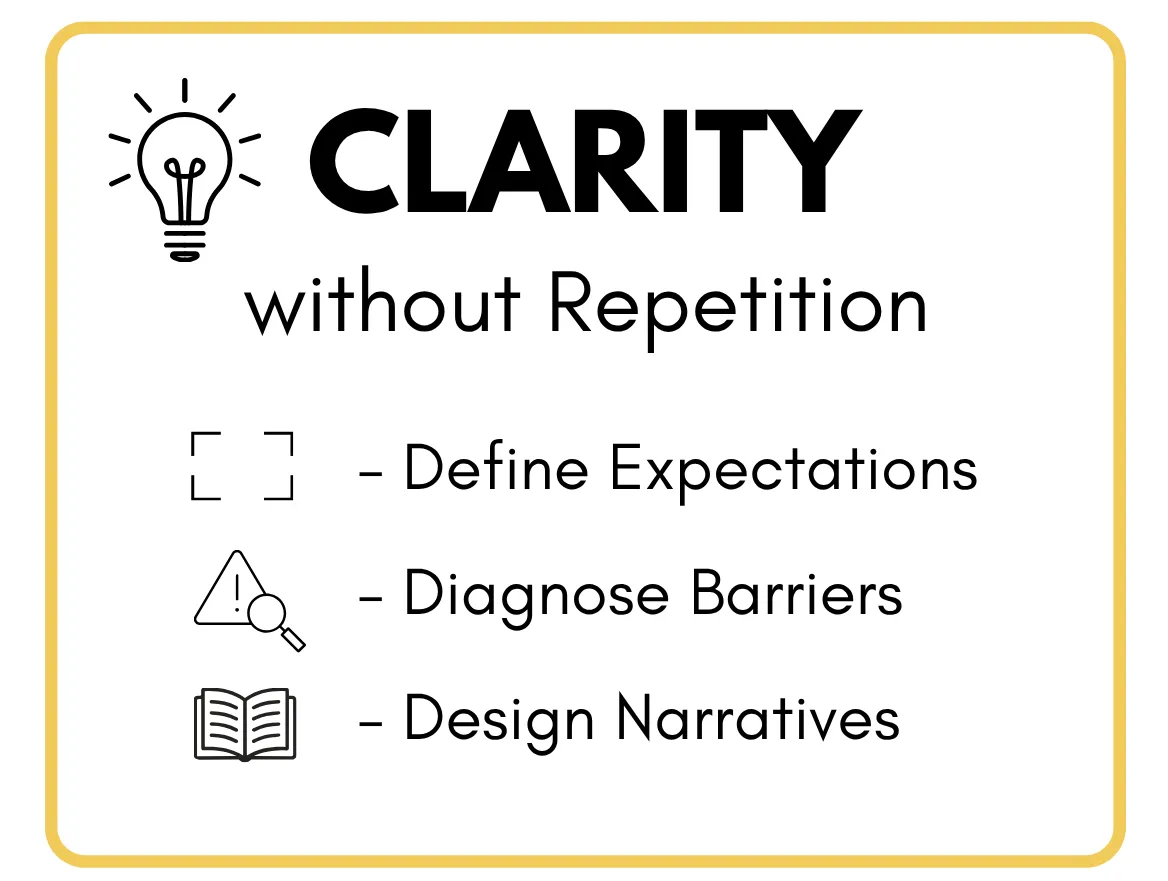
1. Clarity without Repetition
The goal is to stop having to repeat yourself
Here's the plan:
Defining Expectations - We start with taking our abstract goals and getting extremely concrete.
Diagnosing Barriers - We analyze why the message isn't landing so we can communicate clearly - for real this time...
Designing Narratives - We create shared language designed to help us get on the same page faster.
All of these works toward an Unmiscommunication Conversations™ designed to get you the Lightbulb Moment that generates a real breakthrough.
Now we need to lock that Lightbulb Moment into Consistent Follow-Through
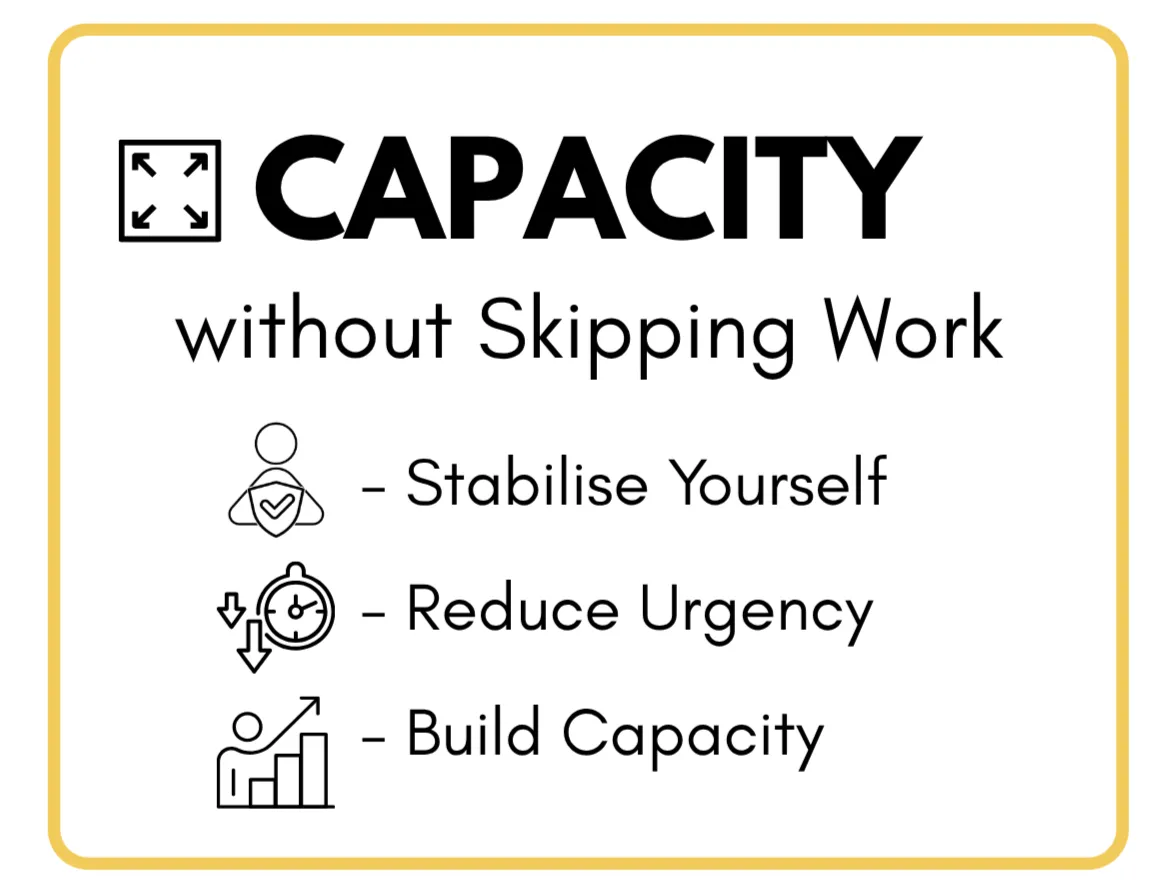
2. Capacity without Skipping Work
Burnout is at an all time high, but you know they don't have too much work...
They're just having trouble managing it.
So the solution isn't less work, it's growing their capacity.
We do that with the RISE Capacity Framework™ and the following plan:
Stabilize Yourself - Just like oxygen masks on an airplane, we need to make sure you have the capacity to even.
Reduce Urgency - Work is hard enough without manufactured urgency. We reduce what isn't essential.
Build Capacity - We check to make sure your team has all 4 RISE Capacity Factors in place.
When they have clarity on what they need to do and the capacity to even then we just need:
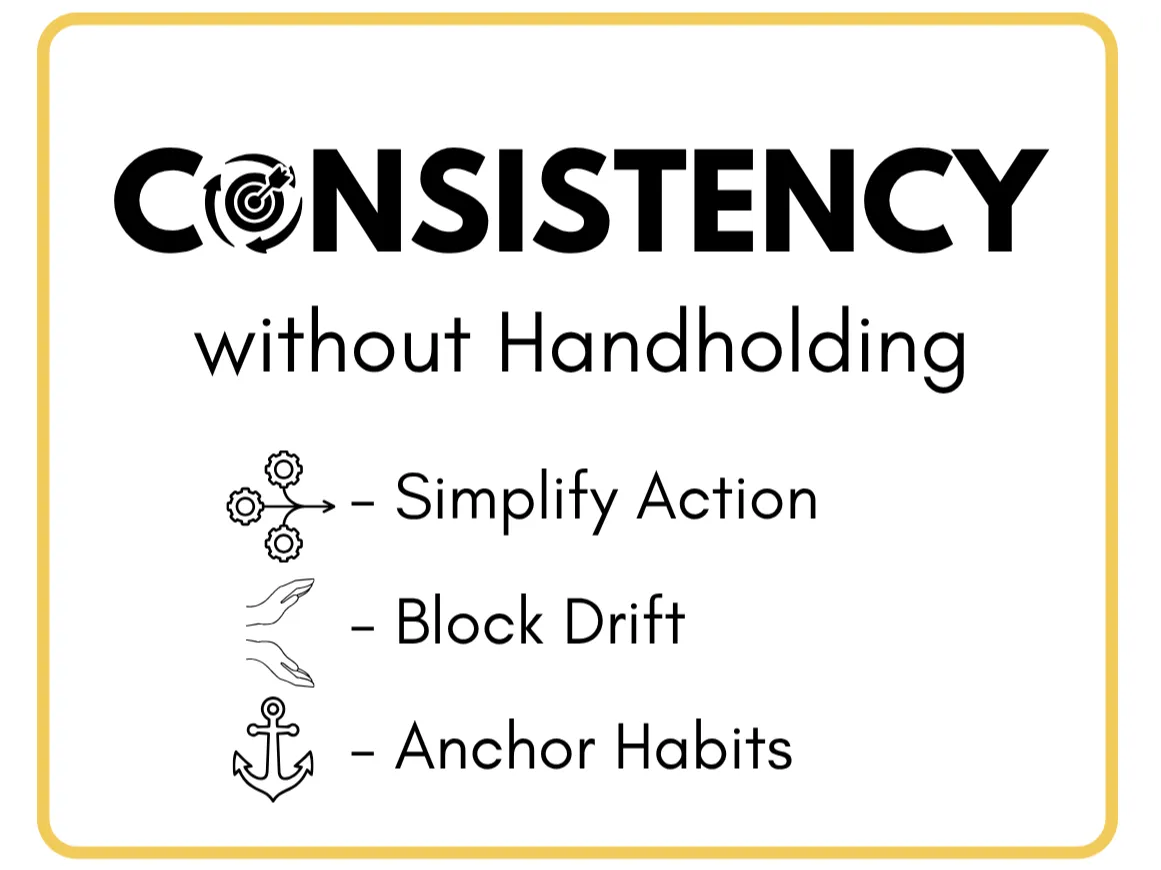
3. Consistency without Handholding
Your team members are here to lighten the workload,
not become the workload
So you need them to preform to expectations without you having to micromanage that
We do that through behavior architecture. People will always default to the path of least resistance so we'll design this behavior with these steps:
Simplify Action - We make it easy to do what we need them to do.
Block Drift - We'll make it hard to do what they're currently defaulting to.
Anchor Habit - We'll get enough repetitions of the action to lock the habit into place.